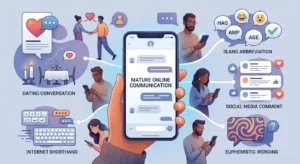
Messaging slang is the informal language people use in text messages, DMs, group chats, comments, and online conversations. It includes abbreviations, acronyms, shortened words, slang phrases, emojis, and casual expressions that make digital communication quicker and more conversational.
Unlike formal English, messaging slang often depends on context, tone, relationship, and platform. A short reply such as “FR,” “IDK,” or “BRB” can be easy to understand once you know the shorthand, while newer expressions may require more context.
Key Takeaways
- Messaging slang refers to informal words, abbreviations, acronyms, and shorthand used in digital conversations.
- Common examples include LOL, BRB, IDK, BTW, TBH, OMG, LMK, and TTYL.
- The meaning of some slang terms can change depending on the conversation.
- Messaging slang is generally more suitable for friends, casual chats, DMs, and social media than formal communication.
- Punctuation, emojis, capitalization, and previous messages can change how a slang expression sounds.
- Not every internet expression is an acronym; some are simply shortened words, phrases, or online expressions.
Messaging Slang Meaning in Text
Messaging slang is a broad term for the informal language people use when communicating digitally. It includes text slang, internet slang, texting abbreviations, chat acronyms, messaging shorthand, and social media expressions.
For example:
- IDK = I don’t know
- BRB = Be right back
- BTW = By the way
- TBH = To be honest
- LMK = Let me know
- TTYL = Talk to you later
- OMG = Oh my gosh / Oh my God
- FR = For real
- NGL = Not gonna lie
- ICYMI = In case you missed it
Messaging slang can also include expressions that are not abbreviations. Words such as sus, rizz, or vibe may appear in online conversations as informal slang without functioning as traditional acronyms.
The main purpose is usually convenience and a conversational tone. People can communicate reactions, opinions, questions, plans, and emotions without writing everything in formal language.
What Does Messaging Slang Stand For?
Messaging slang does not have a single full form. It is a general term describing informal language used in digital messaging.
The word messaging refers to communicating through text or digital messages, while slang refers to informal language associated with particular social or conversational settings.
So, messaging slang is better understood as a category of digital language, rather than one abbreviation with one fixed expansion.
How Is Messaging Slang Used?
Messaging slang appears in many types of online communication, including:

Text Messages
Friends and family may use short forms to make everyday conversations faster.
“IDK what time we’re leaving.”
“BRB, grabbing some water.”
“LMK when you get home.”
DMs and Social Media
People commonly use informal expressions in direct messages, replies, captions, and comments.
“FR this is so funny 😂”
“TBH, I liked the first one better.”
“DM me when you’re free.”
Group Chats
Group conversations often contain several forms of shorthand because participants already understand the shared context.
“BTW, are we still meeting at 7?”
“OMW!”
“LOL everyone saw that.”
Comments
Short slang expressions can make comments feel conversational.
“This is so good 😭”
“NGL, this looks amazing.”
“FR 🔥”
Gaming Chats
Online gaming conversations often use short communication because players may need to respond quickly.
Examples can include terms such as GG for “good game,” AFK for “away from keyboard,” and GLHF for “good luck, have fun.”
Real Chat Examples
Here are varied examples of how messaging slang can appear naturally:
- A: “Are you coming tonight?”
B: “IDK yet.” - A: “Where are you?”
B: “OMW.” - A: “Can you send me the notes?”
B: “Sure, LMK which ones.” - A: “I finally finished it.”
B: “OMG, nice!” - A: “Did you see that video?”
B: “LOL yes 😂” - A: “BTW, what time should we meet?”
- A: “I’ll text you later.”
B: “TTYL.” - A: “TBH, I wasn’t expecting that.”
- A: “Are you free tomorrow?”
B: “Not sure, I’ll LMK.” - A: “FR, that was hilarious.”
- A: “I need to go for a minute.”
B: “BRB.” - A: “NGL, this song is really good.”
- A: “ICYMI, the schedule changed.”
- A: “Can you help me with this?”
B: “NP.” - A: “Thanks for helping!”
B: “YW!” - A: “Do you know what happened?”
B: “IDK 😭” - A: “Good luck!”
B: “TY!” - A: “Are we still on for Saturday?”
B: “Yep, for sure.” - A: “GG!”
B: “GG!” - A: “I have to go now.”
B: “K, TTYL.”
These examples show why context matters. The same abbreviation can sound friendly, neutral, enthusiastic, or even slightly cold depending on what surrounds it.
How to Reply to Messaging Slang
There is no single response to messaging slang because the appropriate reply depends on the specific expression and conversation.
Casual Replies
For everyday conversations, you can simply respond naturally.
- “Yeah, same.”
- “For sure.”
- “Haha, true.”
- “Okay!”
- “Sounds good.”
Friendly Replies
When someone uses slang in a friendly conversation, match their casual tone if it feels natural.
- “Lol exactly 😂”
- “I know right?”
- “Same here!”
- “That’s actually so funny.”
Funny Replies
Some slang invites a playful response.
- “You really said that 😂”
- “Okayyy, I see you.”
- “That escalated quickly 😭”
- “No way lol.”
Neutral Replies
If you are unsure about the tone, keep your answer simple.
- “Okay.”
- “Got it.”
- “Sure.”
- “Thanks for letting me know.”
Flirty or Relationship Replies
Messaging slang does not automatically indicate romantic interest. If the conversation is already clearly romantic, you can respond according to the existing tone.
For example:
- “Haha, you’re funny.”
- “You’re making me smile.”
- “I was wondering when you’d text.”
- “That’s sweet of you.”
The relationship, previous messages, wording, and overall conversation matter more than one abbreviation by itself.
Context & Relationship Meaning
Messaging slang generally does not change its basic definition depending on whether it comes from a guy or a girl.
For example, if someone sends “IDK,” the abbreviation normally means “I don’t know” regardless of who sends it.
However, the surrounding context can change how the message feels.
Consider:
“IDK lol”
This may sound casual or uncertain.
Compare it with:
“IDK.”
The second version may feel more direct or serious because punctuation and the absence of an emoji or extra wording can affect the perceived tone.
The same principle applies when messaging with:
- a friend
- a classmate
- a family member
- a crush
- someone you’re dating
- someone you do not know well
A slang term alone cannot prove that someone is flirting, interested, annoyed, rejecting you, or expressing romantic feelings.
What Tone Does Messaging Slang Have?
Messaging slang is usually casual and conversational, but individual terms can carry different tones.

Depending on the expression and context, messaging slang can sound:
- Friendly: “TYSM!”
- Playful: “LOL 😂”
- Excited: “OMG!”
- Uncertain: “IDK”
- Honest or direct: “TBH”
- Relaxed: “NP”
- Brief: “K”
- Humorous: “LMAO”
- Supportive: “GLHF”
Even a normal abbreviation can feel different depending on punctuation, capitalization, emojis, and the relationship between the people communicating.
Is Messaging Slang Rude or Offensive?
Messaging slang itself is not automatically rude or offensive. Most common abbreviations are simply informal ways of communicating.
However, some slang expressions contain profanity or can sound disrespectful depending on the situation.
For casual conversations with friends, terms such as LOL, IDK, BRB, BTW, and TBH are generally informal rather than inherently offensive.
For school, professional communication, applications, formal emails, or messages to someone you do not know well, standard language is usually a safer choice.
A useful rule is:
If you would not normally use the expression in a formal message, consider writing it out instead.
Who Uses Messaging Slang?
Messaging slang is used by people communicating through text messages, social media, DMs, online communities, and group chats.
There is no single age group that owns all messaging slang. Some abbreviations have been used for many years, while newer expressions can become popular within particular online communities.
Language also changes over time. An abbreviation that feels familiar in one group may be unfamiliar to another, so context and audience are important.
Other Meanings of Messaging Slang
“Messaging slang” is itself a broad language category rather than a specific acronym, so it does not have one major alternative expansion.
However, individual messaging slang terms can have multiple meanings.
For example, AFK commonly means “away from keyboard” in online and gaming contexts, while DM refers to a direct message on platforms that support private messaging.
This is why it is important to look at the complete sentence and conversation rather than interpreting an abbreviation in isolation.
Messaging Slang vs. Similar Terms
Several terms describe overlapping forms of digital language:
| Term | Meaning | Difference |
|---|---|---|
| Messaging slang | Informal language used in digital messaging | Broad category |
| Texting abbreviation | A shortened form used in texts | Usually focuses on shortened words or phrases |
| Internet slang | Informal language used online | Broader than messaging alone |
| Acronym | A term formed from letters of a phrase | One type of messaging shorthand |
| Chat shorthand | Shortened language used in online chats | Often emphasizes speed and convenience |
| Textspeak | Informal written language associated with texting | Can include abbreviations, symbols, and shortened spellings |
These categories overlap, so one expression can fit more than one description.
Common Mistakes About Messaging Slang
Assuming Every Short Word Is an Acronym
Not every slang expression is an acronym. Some are shortened words, informal spellings, phrases, or expressions that developed through online communication.
Assuming One Meaning Always Applies
Some abbreviations have multiple meanings. The surrounding conversation should determine which interpretation makes sense.
Treating Slang as Formal English
Messaging slang is designed for casual communication. It should not automatically be transferred into formal school or professional writing.
Overreading a Short Reply
A message such as “K,” “IDK,” or “LOL” does not automatically reveal someone’s feelings. The broader conversation provides much better context.
Assuming All Slang Is New
Some messaging abbreviations have been around for years. Digital language contains both long-established shorthand and newer expressions.
Related Internet Slang
| Term | Meaning | Common Use |
|---|---|---|
| LOL | Laughing out loud | Showing amusement |
| IDK | I don’t know | Expressing uncertainty |
| BRB | Be right back | Temporarily leaving a chat |
| BTW | By the way | Adding another point |
| TBH | To be honest | Introducing an honest opinion |
| LMK | Let me know | Asking someone to provide information |
| TTYL | Talk to you later | Ending a conversation temporarily |
| OMG | Oh my gosh / Oh my God | Surprise or excitement |
| NGL | Not gonna lie | Introducing an honest comment |
| FR | For real | Agreement or emphasis |
| DM | Direct message | Private social-media messaging |
| GG | Good game | Gaming conversations |
Real-World Conversation
Imagine two friends planning to meet:
Alex: “Are you still coming at 6?”
Sam: “IDK, I might be late.”
Alex: “Okay, LMK when you know.”
Sam: “BRB, checking with my parents.”
Here, the abbreviations make the conversation quick and informal without changing its basic meaning.
People Also Ask
What is messaging slang?
Messaging slang is informal language used in text messages, DMs, group chats, comments, and other digital conversations. It can include abbreviations, acronyms, shortened words, slang phrases, and other shorthand.
What are some common messaging slang words?
Common examples include LOL, IDK, BRB, BTW, TBH, LMK, TTYL, OMG, NGL, and FR. Their exact meaning should always be checked against the surrounding conversation when an abbreviation has multiple uses.
Why do people use slang in text messages?
People use messaging slang because it can make conversations feel faster, shorter, and more casual. It can also help communicate tone, humor, reactions, or familiarity.
Is texting slang the same as internet slang?
They overlap, but they are not exactly the same. Texting slang focuses more specifically on messaging, while internet slang can include language used in comments, forums, social platforms, gaming communities, and other online spaces.
Is messaging slang appropriate for school?
It depends on the situation. Casual messages between friends may use slang, but assignments, formal emails, presentations, and other academic work generally call for standard language.
Is messaging slang appropriate at work?
Some widely understood abbreviations may appear in casual workplace chats, but formal emails and professional communication are usually clearer when written in standard language. When unsure, choose the more professional wording.
Can messaging slang have more than one meaning?
Yes. Some abbreviations can represent different phrases depending on the context. Looking at the entire sentence and the conversation around it usually makes the intended meaning clearer.
Does messaging slang always indicate a certain age group?
No. Different expressions are used by different communities and individuals. It is better to interpret the term from its context rather than assuming the sender belongs to a particular generation.
Conclusion
Messaging slang is the informal language used across text messages, DMs, group chats, comments, gaming conversations, and other forms of digital communication. It includes abbreviations such as IDK, LOL, BRB, TBH, and LMK, along with slang words and casual expressions.
Most messaging slang is appropriate for informal conversations, but professional or formal situations usually call for standard language. When a term seems unclear, consider the context, wording, punctuation, emojis, platform, and relationship before deciding what the sender means.

For three and a half years, Charlotte Reed has worked as a writer shaping puns and jokes around distinct subjects and vocabulary. She covers food, animals, seasonal themes, technology, entertainment, and trending topics. Her process includes examining topic-specific language, building wordplay from relevant terms, and editing punchlines for sharper phrasing, structure, and comedic timing.