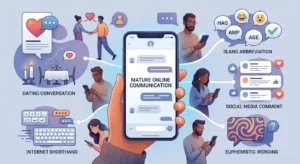
Internet abbreviations are shortened words, phrases, or expressions used in online communication to make messages quicker and easier to type. Common examples include LOL, BRB, IDK, BTW, TBH, FYI, and TTYL. They appear in texts, DMs, comments, group chats, gaming conversations, and other casual digital communication.
Key Takeaways
- Internet abbreviations are shortened forms used in texting, chats, social media, and other online communication.
- They can include acronyms, initialisms, shortened words, numbers, and text-message shorthand.
- Common examples include LOL = Laugh Out Loud, BRB = Be Right Back, and IDK = I Don’t Know.
- The same abbreviation can sometimes have different meanings depending on context.
- Most internet abbreviations are informal and are better suited to casual conversations than formal writing.
- Understanding the tone and context is just as important as knowing the full form.
Internet Abbreviations Meaning in Text
In text messages and online conversations, internet abbreviations are shortened versions of words or phrases that help people communicate more quickly.
They are sometimes called text abbreviations, texting shorthand, internet slang, chat abbreviations, or online shorthand. The category is broad: some forms are true acronyms, some are initialisms, and others are simply shortened words or combinations of letters and numbers.
For example:
- LOL = Laugh Out Loud
- BRB = Be Right Back
- IDK = I Don’t Know
- BTW = By The Way
- TBH = To Be Honest
- FYI = For Your Information
- IMO = In My Opinion
- TTYL = Talk To You Later
- IRL = In Real Life
- NVM = Never Mind
These shortcuts can make a message feel quick, casual, conversational, or playful. Their meaning usually comes from the surrounding conversation rather than the letters alone.
Common Internet Abbreviations
| Abbreviation | Meaning | Common Use |
|---|---|---|
| LOL | Laugh Out Loud | Reacting to something funny |
| BRB | Be Right Back | Temporarily leaving a chat |
| IDK | I Don’t Know | Showing uncertainty |
| BTW | By The Way | Adding information |
| TBH | To Be Honest | Introducing an honest opinion |
| FYI | For Your Information | Sharing useful information |
| IMO | In My Opinion | Giving an opinion |
| TTYL | Talk To You Later | Ending a conversation |
| IRL | In Real Life | Referring to offline life |
| NVM | Never Mind | Dropping or correcting a thought |
| SMH | Shaking My Head | Showing disappointment or disbelief |
| OMG | Oh My God | Surprise or strong reaction |
| GTG | Got To Go | Saying you have to leave |
| AFK | Away From Keyboard | Temporarily unavailable online |
| DM | Direct Message | Referring to a private online message |
| ICYMI | In Case You Missed It | Calling attention to earlier content |
| JK | Just Kidding | Showing that something was a joke |
| NGL | Not Gonna Lie | Introducing an honest comment |
| FR | For Real | Agreement, emphasis, or disbelief |
| POV | Point Of View | Framing a situation or perspective |
These examples represent several types of online shorthand rather than one single linguistic category.
What Do Internet Abbreviations Stand For?
Internet abbreviations do not have one single full form. The phrase refers to an entire category of shortened language used in internet communication.
Individual abbreviations have their own expansions. For example, BRB stands for “Be Right Back,” while IDK stands for “I Don’t Know.” Some are made from the first letters of several words, while others shorten individual words or use numbers as substitutes for sounds or words.
It is also useful to distinguish abbreviation from acronym. “Abbreviation” is a broad term that can cover several types of shortened forms, while an acronym is a specific type of abbreviation formed from parts of a longer expression.
So, asking “What does internet abbreviations stand for?” is slightly different from asking what LOL, BRB, or TBH stands for.
How Are Internet Abbreviations Used?
Internet abbreviations are mainly used to make casual digital communication faster, shorter, and more conversational.
Text Messages
People use abbreviations in everyday texting to shorten common phrases.
Example:
“BRB, I’m grabbing something to eat.”
Direct Messages
Short forms are common in private online messages because they fit naturally into quick conversations.
Example:
“IDK if I can make it tonight tbh.”
Group Chats
Group conversations often move quickly, so abbreviations can make replies easier to type.
Example:
“LOL everyone saw that 😂”
Social Media Comments
Short forms can make comments brief while still expressing a reaction.
Example:
“OMG this is so good.”
Gaming and Online Communities
Gaming chats and online communities also use abbreviations such as AFK, GG, GLHF, LFG, and IRL. The exact vocabulary can vary depending on the community and activity.
Casual Online Communication
Internet abbreviations can also appear in casual emails, forums, and other digital conversations. However, the appropriate choice depends on the audience and setting.
Internet Abbreviations in Different Contexts
The same abbreviation can feel different depending on who sends it, what was said before it, and the overall tone of the conversation.

From a Friend
A friend might use abbreviations naturally because both people are comfortable with casual texting.
“IDK lol, what do you want to eat?”
Here, the abbreviations simply make the message relaxed and conversational.
From a Guy or Girl
The abbreviation itself does not automatically have a different meaning because it comes from a guy or a girl.
For example, “TBH, that movie was great” generally means the same thing regardless of who sends it.
From a Crush
An abbreviation can appear in a romantic or friendly conversation, but it does not prove romantic interest by itself.
For example, “LOL you’re funny” could be friendly, playful, or part of a flirtatious conversation. The surrounding messages provide the important context.
In Dating
People may use casual shorthand while texting someone they are dating, but abbreviations still keep their basic meanings.
“NGL, I had a really good time tonight.”
The relationship context can affect the feeling of the message without changing what NGL means.
In a Group Chat
Abbreviations often help people respond quickly when several messages are being exchanged.
“BRB guys, dinner’s ready.”
In Social Media Comments
A short abbreviation can communicate a reaction without requiring a complete sentence.
“FR 😂” can express agreement or emphasis, depending on the conversation.
Real Chat Examples
Here are realistic examples showing how common internet abbreviations work in everyday conversations:
- A: “Are you coming tonight?”
B: “IDK yet. I’ll let you know.” - A: “BRB, my phone is dying.”
- A: “BTW, did you finish the assignment?”
- A: “LOL that video was hilarious.”
- A: “TBH, I liked the first movie better.”
- A: “FYI, the meeting starts at 3.”
- A: “GTG, talk later!”
- A: “TTYL when I get home.”
- A: “NVM, I figured it out.”
- A: “OMG, look at this picture!”
- A: “IMO, the second option is better.”
- A: “Are you online?”
B: “AFK for a few minutes.” - A: “Have you met her IRL?”
B: “No, only online.” - A: “ICYMI, they posted the announcement.”
- A: “I thought you were serious!”
B: “JK 😂” - A: “NGL, that was actually pretty good.”
- A: “You really said that?”
B: “FR 😭” - A: “SMH, I forgot my keys again.”
- A: “Can you send me the details?”
B: “Sure, I’ll DM you.” - A: “LOL I can’t believe we both forgot.”
These examples show why context matters: the abbreviation often adds tone or convenience rather than changing the basic message.
How to Reply to Internet Abbreviations
Because “internet abbreviations” describes a broad category, the best response depends on the specific abbreviation someone used.
Casual Replies
If someone sends a simple abbreviation such as LOL, IDK, BTW, or FR, you can answer normally.
- “Haha, exactly!”
- “Same 😂”
- “Yeah, I get you.”
- “Got it.”
- “Okay, sounds good.”
Friendly Replies
For casual conversations with friends:
- “LOL, seriously!”
- “I know, right?”
- “Thanks for letting me know!”
- “No worries!”
- “Talk to you later!”
Funny Replies
When the conversation is already playful:
- “BRB, I need a minute 😂”
- “LOL you’re too much.”
- “FR? You actually did that? 😭”
- “Okay, that was funny.”
Neutral Replies
If you are unsure about the tone, keep your response simple:
- “Got it.”
- “Okay.”
- “Thanks.”
- “Understood.”
- “Sounds good.”
Flirty/Relationship Replies
If the conversation is already clearly romantic, you can match that tone without assuming that the abbreviation itself is romantic.
- “LOL, you’re cute.”
- “NGL, I had fun too.”
- “FR? Then we should do it again.”
- “Okay, I’ll take that as a compliment 😊”
What Tone Do Internet Abbreviations Have?
Internet abbreviations are generally casual and informal, but the tone varies by abbreviation and context.
Common tones include:
- Casual: “IDK what to eat.”
- Friendly: “TTYL!”
- Playful: “JK 😂”
- Funny: “LOL, that’s wild.”
- Direct: “FYI, the time changed.”
- Emphatic: “FR, that was amazing.”
- Sarcastic: Some abbreviations can sound sarcastic when combined with certain wording or punctuation.
- Neutral: Some abbreviations simply shorten a phrase without adding much emotion.
For example, “LOL” can genuinely indicate laughter, soften a message, or sometimes make an awkward statement feel less serious. The surrounding words, punctuation, emojis, and conversation history can change how it comes across.
Is Internet Abbreviation Rude or Offensive?
Internet abbreviations are not inherently rude or offensive. Most common forms are simply shortcuts for everyday phrases.
However, some abbreviations can be inappropriate in certain situations because they may contain profanity, strong language, or an overly casual tone.
Casual Conversations
They are generally suitable when you are texting friends or participating in an informal group chat.
Social Media
Common abbreviations can work naturally in comments, DMs, and casual posts.
School
For informal conversations with friends, they may be fine. For assignments or formal communication with teachers, standard English is usually the safer choice.
Work
Some familiar abbreviations such as FYI, ASAP, or ETA can appear in workplace communication, but slang-heavy abbreviations may not fit every professional setting.
Professional or Formal Writing
Avoid relying on internet slang such as LOL, IDK, or BRB in formal writing unless the context specifically calls for it.
A useful rule is simple: match the level of formality to the person and situation.
Other Meanings of Internet Abbreviations
Internet abbreviations can sometimes overlap with abbreviations used outside texting. Context is therefore important.
Internet Abbreviations in Technology
Some online abbreviations refer to technical concepts rather than slang. Examples include HTTP, HTML, VPN, URL, and IP.
These are not necessarily casual texting expressions. They belong to the broader world of internet and technology terminology.
Internet Abbreviations in Gaming
Gaming communities use their own shorthand, including terms such as AFK for “Away From Keyboard” and GG for “Good Game.” Other gaming abbreviations can refer to game modes, mechanics, roles, or player behavior.
Internet Abbreviations in Business
Some abbreviations used online are also common in business communication, such as FYI, ASAP, ETA, FAQ, and EOD.
Their meaning can remain the same even when the conversation moves from casual texting to workplace communication.
Internet Abbreviations in Social Media
Social platforms have helped popularize shorthand such as DM, POV, FYP, ICYMI, and IRL. The meaning can depend on the platform and the surrounding conversation.
Common Mistakes About Internet Abbreviations
Assuming Every Short Form Is an Acronym
Not every shortened word is technically an acronym. “Abbreviation” is the broader category, while acronyms and initialisms are specific forms of shortening.
Assuming One Abbreviation Has Only One Meaning
Some abbreviations have multiple meanings. For example, OP can mean “Original Poster” in online discussions but can mean “Overpowered” in gaming.
Reading the Letters Without Context
An abbreviation can be difficult to interpret if you only look at the letters. Check the surrounding sentence, conversation topic, and platform.
Assuming an Abbreviation Is Romantic
A casual abbreviation does not prove that someone is flirting or expressing romantic interest. The relationship and conversation matter more than the shorthand itself.
Using Slang in Formal Writing
Internet shorthand can make a formal message sound too casual. When writing for school, work, or an official situation, use standard wording unless informal language is appropriate.
Internet Abbreviations and Related Slang

| Term | Meaning | Common Use |
|---|---|---|
| Textese | Informal shortened language used in texting | Text messages and chats |
| Internet slang | Informal language used online | Social media and online communities |
| Acronym | Short form made from parts or initial letters of a phrase | Online and general communication |
| Initialism | Short form pronounced letter by letter | Texting, business, and online writing |
| Chat shorthand | Shortened expressions used in conversations | Group chats and messaging |
| Emoticon | Characters arranged to express emotion | Text and online messages |
| Emoji | Small visual symbols used to express ideas or feelings | Texting and social media |
Internet abbreviations overlap with these categories, but they are not all exactly the same thing.
People Also Ask About Internet Abbreviations
What is an internet abbreviation?
An internet abbreviation is a shortened form of a word, phrase, or expression used in online communication. Examples include LOL, BRB, IDK, and BTW.
What is the most common internet abbreviation?
There is no single abbreviation that is universally the most common across every platform, community, and time period. Familiar examples include LOL, BRB, IDK, BTW, OMG, and FYI.
What is the difference between an abbreviation and an acronym?
An abbreviation is a broad term for a shortened form of a word or phrase. An acronym is a particular type of abbreviation formed from parts of a longer expression; some acronyms are pronounced as words, while initialisms are pronounced letter by letter.
Why do people use abbreviations in texting?
People use them to make messages shorter and faster to type and to fit the casual style of online conversation. Some also help communicate reactions or tone in a compact way.
Are internet abbreviations considered slang?
Some are. Internet slang is a broader category that can include abbreviations, acronyms, shortened words, expressions, and other informal language used online.
Can internet abbreviations have different meanings?
Yes. Some abbreviations have more than one meaning, especially when they are used across different communities. Context is often the best way to determine which meaning applies.
Should I use internet abbreviations at work?
It depends on the abbreviation and workplace. Common professional shorthand such as FYI or ETA may be appropriate, while highly casual slang may sound unprofessional in a formal message.
Are internet abbreviations the same as texting abbreviations?
They overlap heavily, but they are not always identical. Texting abbreviations specifically focus on messaging, while internet abbreviations can also appear in social media, forums, comments, gaming chats, and other online spaces.
Conclusion
Internet abbreviations are shortened words, phrases, and expressions used to make online communication quicker and more casual. Examples such as LOL, BRB, IDK, BTW, TBH, and TTYL are common forms of digital shorthand.
There is no single full form for “internet abbreviations” because it describes a broad category rather than one acronym. The best way to understand any abbreviation is to consider its meaning, context, tone, platform, and relationship between the people communicating.
Most internet abbreviations work best in informal conversations, while formal school, business, and professional writing usually calls for standard language.

For three and a half years, Charlotte Reed has worked as a writer shaping puns and jokes around distinct subjects and vocabulary. She covers food, animals, seasonal themes, technology, entertainment, and trending topics. Her process includes examining topic-specific language, building wordplay from relevant terms, and editing punchlines for sharper phrasing, structure, and comedic timing.